
 Share
Share 



Gaming Edge’s TL;DR
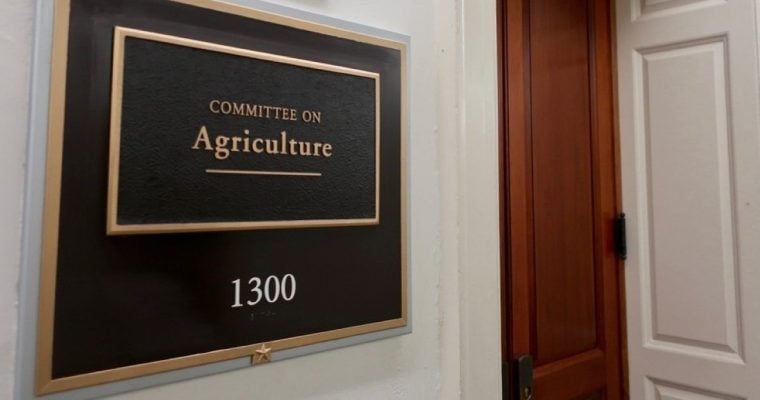
- A House Agriculture subcommittee used a Tuesday hearing to spotlight the growing clash over sports prediction markets.
- The Commodity Futures Trading Commission was asked whether it is regulating a lawful derivatives product or letting sports betting slip around state and tribal rules.
At a House Agriculture hearing on Tuesday, “Examining Customer Protections and Market Integrity in Sports Event Prediction Markets,” Rep. Angie Craig (D-MN) questioned whether the Commodity Futures Trading Commission (CFTC) is equipped to police sports event contracts, saying, “The CFTC needs a fully appointed commission, increased expert staffing to do their job effectively.”
Committee Chair Dusty Johnson (R-SD) echoed the staffing concern, adding, “Chairman Selig is wonderful, but we would take four more.”
Witnesses split sharply on the core issue, are sports prediction markets commodity trading or sports betting?
Robert Schwartz, a partner at Morgan Lewis and former CFTC general counsel, and Carl Kennedy, a derivatives attorney at Katten Muchin Rosenman, argued the Commodity Exchange Act already gives the CFTC broad authority over event contracts. Schwartz said that if Congress wants sports-based contracts barred, it should amend the law. Kennedy argued federal and state systems “can, and already do, operate side by side.”
Others said the products are functionally gambling. Chris Cylke, senior vice president of government relations at the American Gaming Association, and David Bean, chairman of the Indian Gaming Association, argued that sports event contracts bypass state police powers and tribal authority under the Indian Gaming Regulatory Act. Bean called the CFTC’s approach “The height of regulatory capture.”
The hearing also zeroed in on the Michigan-Kalshi standoff. Rep. Kristen McDonald Rivet (D-MI) questioned the CFTC order directing Kalshi to defy a Michigan state court order, calling it “contrary,” while Rep. Jill Tokuda (D-HI) described the situation as “regulatory arbitrage.” Schwartz called the move “a flex.”
Most contracts on Kalshi are sports-related
If sports prediction markets remain under CFTC oversight, they may continue operating outside the state-by-state sports betting model. If Congress or regulators decide these contracts are gambling, that could strengthen state and tribal regulators and narrow the path for federally supervised sports event markets.
The hearing also highlighted scale. Cylke cited $111 billion in Kalshi trading volume through the first half of 2026, with 80% tied to sports. He also said 45% of online sports betting advertising now comes from prediction market operators.
On integrity, Solidus Labs CEO Asaf Meir said the risks are real but manageable with purpose-built surveillance. In written testimony, he cited one client that handled 121,000 alerts across 20,000 markets in Q2 2026, opened more than 400 investigations, and referred more than two dozen matters to law enforcement.
Based on reporting by Brett Smiley for InGame.